About Corn Grits
Nature's goodness in every granule • Botanical anatomy, fractured endosperm milling science, and culinary heritage.
What Exactly Are Corn Grits?
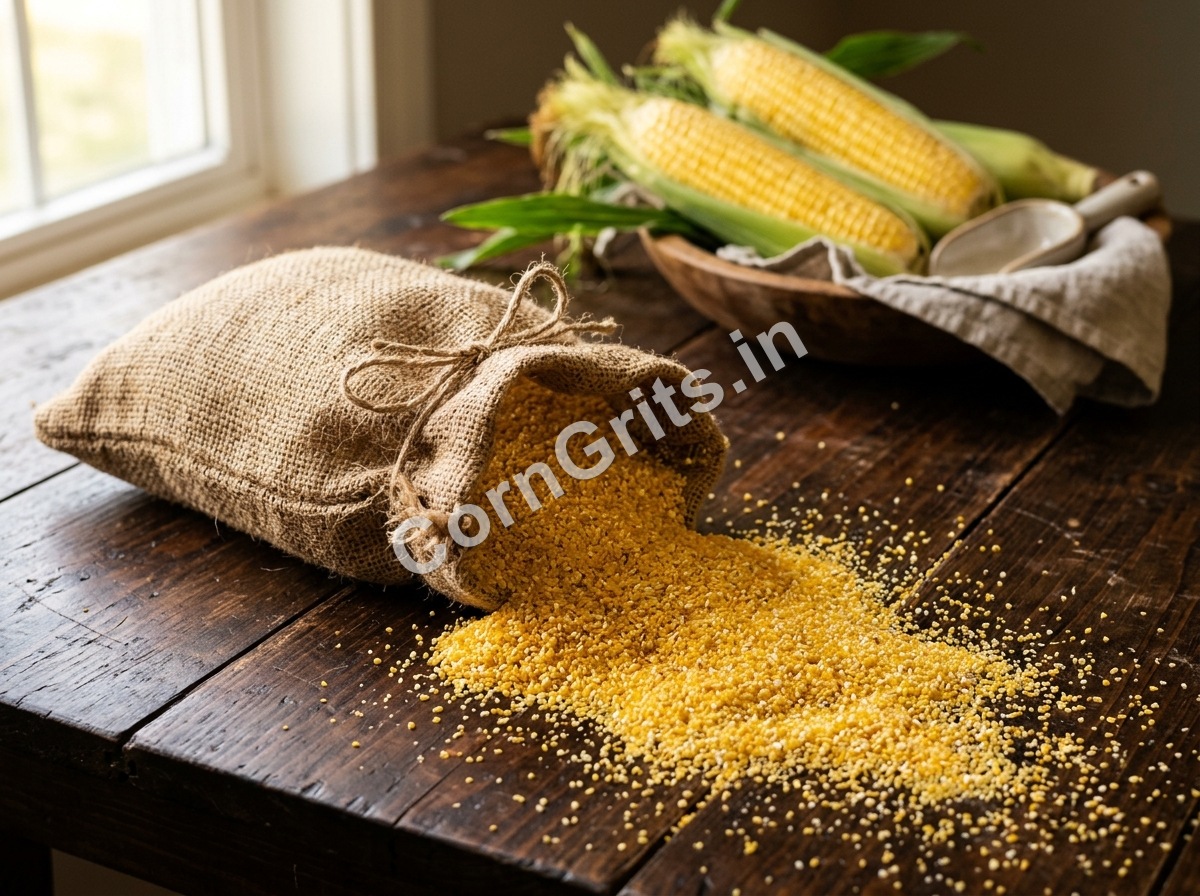
Corn Grits are coarse, milled granules derived from clean, selected corn kernels (Zea mays). Renowned for their rich nutritional density, natural sweetness, and versatile texture, corn grits serve as an indispensable cornerstone of both culinary traditions and modern industrial food processing.
At modern dry-milling facilities, each batch is produced from premium non-GMO field maize through dry-milling techniques that carefully separate the starchy endosperm from the germ and fibrous bran jacket, ensuring a pure, low-fat granule that cooks evenly.
Nutrition
Gluten-Free
Versatile
Anatomy of a Maize Kernel
True corn grits are extracted exclusively from the pristine starchy endosperm:
The Endosperm (Grits Source)
The energy storehouse rich in complex carbohydrates and gluten-free zein proteins, crushed and classified into calibrated commercial grits.
The Germ (Shelf Stability)
High in corn oils; mechanically separated by degerminators to keep fat ≤0.8%, preventing snack rancidity and off-flavors in beer.
The Pericarp Hull (Bran Jacket)
The fibrous outer cellulose skin, cleanly stripped by aspirators and polishers so grits cook smooth without gritty husk fibers.
4-Step Precision Dry Milling Process
How raw field maize is refined into calibrated granular fractions:
Vibro-sifting, air aspiration, magnetic separators, and density destoners eliminate chaff, dust, and pebbles.
Moisture tempering toughens bran and germ while keeping the endosperm brittle for clean cracking.
Degerminators crack corn along natural fault lines, popping out the oily germ intact and stripping the pericarp.
Rotary plansifters sort fractions through calibrated meshes into standard codes (101, 101A, 108, 112, Meal & Flour).